Arab Spring (2010–2012)
A wave of uprisings and protest movements reshaped politics across parts of the Middle East and North Africa.
2010—2019 · MOBILE · SOCIAL · STREAMING · GLOBAL
The decade the feed became the front page.
Smartphones, social networks, streaming platforms and app-based services changed how people communicated, watched, listened, worked and moved through cities—while political polarization, climate activism and global crises shaped public life.
01 / Overview
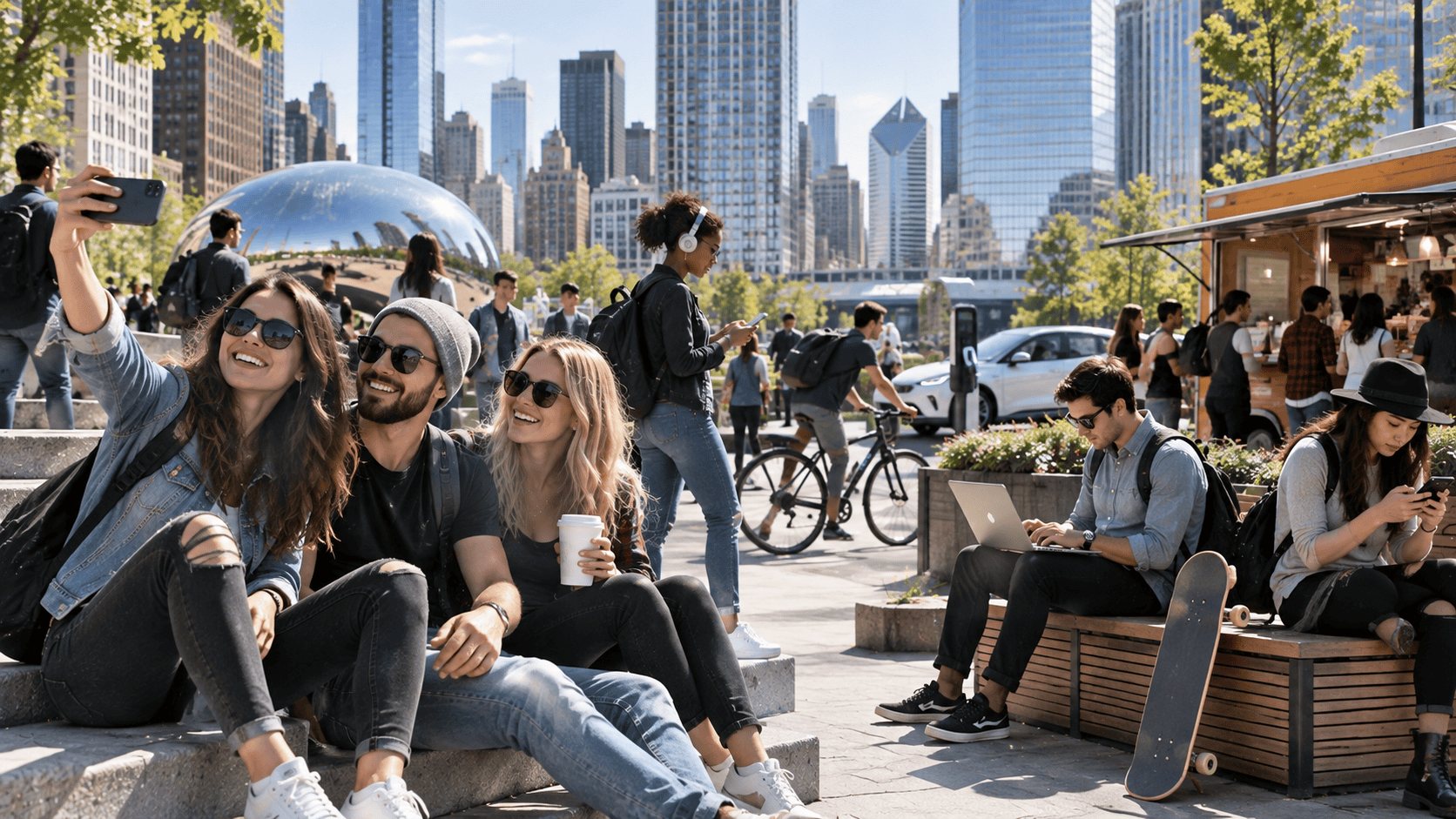
The 2010s saw the digital age become fully embedded in daily life. Smartphones became nearly constant companions, changing how people communicated, navigated, photographed, shopped and followed the news.
Social platforms grew into major cultural and political forces. Images, hashtags, viral posts and algorithmic feeds influenced public conversation and personal identity.
Politics became more polarized in many countries. The Arab Spring, Brexit, migration debates, nationalism, protest movements and the rise of new political coalitions reflected a decade of deep social tension.
Climate change moved closer to the center of public debate as extreme weather, scientific warnings and youth-led activism increased pressure for action.
Technology continued advancing rapidly. Machine learning entered more industries, cloud computing expanded, virtual assistants arrived in homes and reusable rockets changed expectations for commercial spaceflight.
Streaming transformed entertainment. Viewers shifted from schedules toward on-demand video, music became increasingly subscription-based and the idea of binge-watching became ordinary.
Fashion blended comfort, streetwear, nostalgia and sustainability. Athleisure became everyday clothing while 1990s and early-2000s revivals appeared again and again.
02 / Events
A wave of uprisings and protest movements reshaped politics across parts of the Middle East and North Africa.
A major earthquake and tsunami triggered a severe nuclear accident at Japan’s Fukushima Daiichi power plant.
U.S. forces killed the al-Qaeda leader in Abbottabad, Pakistan.
Large numbers of refugees and migrants arrived in Europe, many fleeing war and instability.
The United Kingdom voted to leave the European Union.
The movement drew worldwide attention to sexual harassment, abuse and accountability.
A major fire severely damaged the historic cathedral in Paris.
Large demonstrations challenged proposed extradition legislation and later broadened into a wider protest movement.
Youth-led demonstrations pushed climate action into the center of public debate.
The conflict that began in 2011 caused immense destruction, displacement and humanitarian suffering throughout the decade.
Russia annexed Crimea from Ukraine, triggering international condemnation, sanctions and a major geopolitical crisis.
Nearly every country adopted a global framework aimed at limiting climate change.
Marriage equality became legal in a growing number of countries during the decade.
The extremist group seized large areas of Iraq and Syria before losing most of its territory by the end of the decade.
The election highlighted deep political polarization in the United States.
Missile and nuclear tests intensified international concern and diplomatic pressure.
China launched a large international infrastructure and investment program linking Asia, Europe and other regions.
The epidemic became the largest Ebola outbreak recorded up to that time.
A white supremacist attack on two mosques in New Zealand killed 51 people.
The government withdrew high-value banknotes from circulation in a sudden monetary-policy move.
03 / Technology
Software, mobile networks, genetics, artificial intelligence and new hardware all advanced rapidly while digital services became everyday utilities.
Tablet computing moved into the mainstream as touchscreens became a standard way to browse, read, watch video and use apps.
Desktop and industrial additive manufacturing became more accessible and visible.
A powerful method for targeted gene editing transformed biological research.
Private space companies demonstrated repeated booster landings and reuse.
Voice-controlled assistants such as Siri, Alexa and Google Assistant became common consumer tools.
Distributed-ledger systems gained attention through cryptocurrencies and other digital applications.
Cord-free Bluetooth earbuds moved into mainstream everyday use.
Self-driving vehicle research advanced through sensors, machine learning and mapping.
Mobile AR reached mass audiences through games and camera-based experiences.
Faster mobile networks made high-quality streaming and app-based services practical on smartphones.
Connected speakers, lights, thermostats and security devices spread through consumer households.
New treatments using genetic modification reached important clinical milestones.
Qi-compatible charging became widely available in phones and accessories.
High-contrast organic LED screens became common in premium smartphones and televisions.
Improved sensors, materials and controls increased the capabilities of modern prosthetic limbs.
Laboratory-grown meat moved from experimental science toward early demonstrations and pilot projects.
Next-generation mobile networks started commercial deployment at the end of the decade.
The ultra-thin carbon material attracted major scientific and industrial interest.
Computer-vision systems became more widely used in phones, security and identity applications.
Experimental quantum systems showed rapid progress while remaining far from general-purpose consumer use.
04 / Culture
Curated feeds, memes, binge-watching, podcasts, esports, influencers and viral video blurred the line between audience and creator.

Curated feeds, filters and influencer culture changed how people presented everyday life online.
On-demand video and music services reshaped entertainment habits.
Front-facing cameras and social apps turned self-portraiture into a global everyday practice.
Images, jokes and short-form formats became a major language of online communication.
Restaurant discovery, food photography and social sharing turned meals into a visible lifestyle category.
Yoga pants, sneakers and sportswear moved from gyms into daily wardrobes.
Podcasts, documentaries and streaming series drew large audiences to real-world crime stories.
Korean pop music reached enormous international audiences through social media and video platforms.
Streaming made it normal to watch multiple episodes of a series in one sitting.
Meditation apps, wellness routines and mental-health conversations became more mainstream.
Independent breweries and specialty beer culture expanded rapidly.
Competitive gaming developed into a major spectator business with professional leagues and live events.
Comic-book franchises became central to global blockbuster cinema.
Hashtags and online networks helped organize and amplify social movements.
Vintage clothing, specialty coffee, bicycles and artisanal products shaped an influential urban aesthetic.
Campaigns challenged narrow beauty standards and promoted broader representation.
App-based freelance and short-term work became more common.
Television, film, advertising and social media featured wider LGBTQ+ visibility.
Minimalist living and compact homes attracted growing interest.
Fitness, nutrition, supplements, retreats and lifestyle coaching expanded into a huge consumer market.
05 / America
A powerful technology boom reshaped employment, housing and the city’s skyline.
Technology growth accelerated while the city’s music, food and creative scenes continued expanding.
Downtown investment and new businesses became symbols of a wider effort to rebuild after bankruptcy.
Music, tourism and rapid population growth transformed the city.
Food, cycling, independent culture and the 'Portlandia' image drew national attention.
Technology, population growth and legalized cannabis tourism altered the city’s economy and identity.
Recovery from Hurricane Katrina continued alongside a strong cultural and tourism revival.
Technology companies and venture capital drove enormous wealth creation and intensified housing pressure.
The former steel center expanded its identity around universities, robotics, medicine and technology.
Sea-level rise and flooding concerns became increasingly important to planning and development.
The city broadened its entertainment economy beyond traditional casino gambling.
Biotechnology, universities and healthcare remained central to the region’s growth.
National political conflict and polarization became increasingly visible in the capital.
The city balanced major business and cultural strengths with persistent challenges around inequality and violence.
Energy remained central while population growth and diversification continued.
Rapid metropolitan expansion continued across the Valley of the Sun.
The metropolitan area became more diverse while maintaining strong corporate and cultural institutions.
Film and television activity expanded rapidly alongside technology, logistics and population growth.
Neighborhood redevelopment and new investment changed many parts of the city.
The city faced housing pressure while expanding transit and preparing for the 2028 Olympics.
06 / Fashion
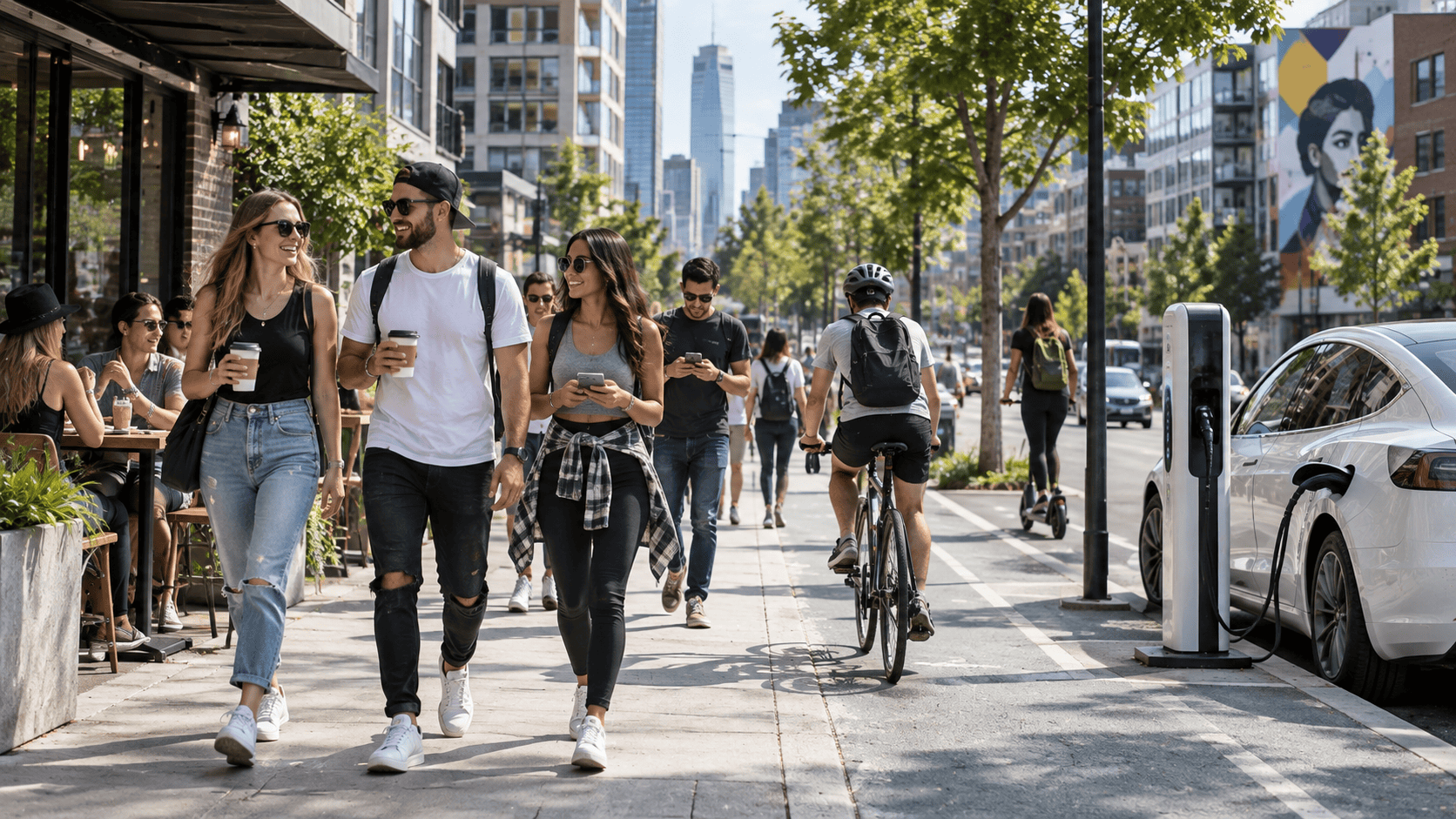
Athleisure, minimalism, streetwear and vintage revival changed everyday wardrobes while sustainability and gender-neutral design became more visible.
Leggings, performance tops and sneakers became everyday clothing.
Plain, deliberately ordinary clothing became an ironic fashion statement.
Thrifting and secondhand fashion grew more visible.
Neutral colors, simple silhouettes and clean styling became highly influential.
Sneakers, hoodies, graphic pieces and limited releases moved into luxury fashion.
Bulky retro-style footwear became a major trend.
Environmental impact and ethical sourcing became more important to many shoppers.
Unisex and androgynous styles became more widely discussed and adopted.
1990s and early-2000s trends returned repeatedly.
Soft muted pink became one of the decade’s signature colors.
Slim denim dominated the early part of the decade.
Midriff-baring tops returned to mainstream fashion.
One-piece garments became common in casual and formal dressing.
Puffed, flared and ruffled sleeves added dramatic volume.
Ironic holiday knitwear became an annual social tradition.
Narrow eyewear revived late-1990s and futuristic styling.
Hipster grooming styles became common far beyond their original subcultures.
Head-to-toe single-color looks became an influential styling technique.
Bare-shoulder silhouettes became a recurring warm-weather trend.
Large and highly visible brand logos returned to mainstream fashion.
07 / Movies
Christopher Nolan’s science-fiction thriller turned layered dreams into a global blockbuster.
David Fincher dramatized the founding of Facebook and the personal conflicts surrounding it.
The superhero film became a major cultural and commercial milestone.
Bong Joon Ho’s dark social satire became a global hit and later won the Academy Award for Best Picture.
The modern Los Angeles musical blended nostalgia, ambition and romance.
Jordan Peele used horror to explore racism, identity and social performance.
The post-apocalyptic action film became celebrated for practical stunts, visual storytelling and kinetic editing.
Richard Linklater filmed the coming-of-age drama over twelve years.
Wes Anderson combined precise visual design, comedy and melancholy in a fictional European setting.
The intimate coming-of-age drama explored identity, masculinity and sexuality.
The Marvel film became the culmination of a decade-long interconnected franchise.
Guillermo del Toro blended fantasy, romance and Cold War imagery.
Pixar revisited its characters through themes of growing up, memory and letting go.
The largely silent black-and-white film celebrated early Hollywood storytelling.
The space-survival thriller used advanced visual effects to create an intense sense of weightlessness.
Martin Scorsese’s black comedy portrayed excess, fraud and financial ambition.
The journalism drama followed the Boston Globe investigation into abuse in the Catholic Church.
The intense music drama explored ambition, discipline and obsession.
Spike Jonze imagined an intimate relationship between a man and an artificial-intelligence operating system.
Christopher Nolan’s war film used intersecting timelines to depict the evacuation from Dunkirk.
08 / Music
Streaming, YouTube and social sharing changed discovery while hip-hop, EDM, K-pop, Latin pop and genre-blending singles reached global audiences.
Country and rap collided in a viral crossover that dominated 2019.
Retro funk became one of the decade’s biggest global pop hits.
The rhythmic pop single became a major streaming-era success.
Latin pop reached extraordinary global streaming and video audiences.
The powerful breakup song combined soul, pop and blues influences.
The bright pop single became one of the decade’s defining viral hits.
The hit dominated charts while also attracting significant criticism and controversy.
The upbeat song became a worldwide pop and video phenomenon.
The Korean pop track became the first YouTube video to pass one billion views.
The minimalist pop single challenged the era’s fascination with luxury and excess.
Disco revival, live instrumentation and electronic polish combined in a global hit.
The self-aware pop song played with media narratives around celebrity and relationships.
The breakout single established Cardi B as a major rap star.
The duet became a major soundtrack hit and awards success.
Latin-influenced pop helped define late-decade crossover radio.
The unusual breakup duet became an international phenomenon.
The stripped-down hit introduced a new kind of Gen Z pop minimalism to the mainstream.
The single marked a decisive move from country into full-scale pop.
The romantic ballad became a long-running global hit.
Music, choreography and symbolic imagery turned the release into a major cultural conversation.
09 / Cars
The electric luxury sedan proved battery-powered cars could combine range, performance and software-driven features.
The redesigned hybrid pushed efficiency and aerodynamic styling further.
An aluminum-intensive body marked a major engineering change for America’s bestselling pickup.
Plug-in hybrid technology combined with supercar performance.
The electric hatchback signaled Volkswagen’s large-scale shift toward battery vehicles.
Carbon-fiber construction and compact electric packaging gave the city car a distinctive identity.
The hatchback offered long electric range at a relatively accessible price.
The hybrid hypercar blended Formula 1 ideas with road-car engineering.
The drag-focused muscle car pushed factory straight-line performance to extremes.
Scandinavian design, advanced safety systems and luxury SUV packaging came together in a major redesign.
The compact car adopted sharper styling and a broader range of turbocharged models.
The hypercar paired extraordinary speed with 1,500 horsepower and luxury engineering.
The three-row SUV quickly became one of Kia’s most acclaimed models.
The roadster returned to a lighter, more compact philosophy.
The Croatian electric supercar demonstrated the performance potential of high-output battery systems.
Independent rear suspension and global sales modernized the classic pony car.
The Swedish hypercar became famous for extreme performance and speed records.
A more rugged redesign strengthened the compact SUV’s mass-market appeal.
The premium electric SUV brought battery power into Audi’s mainstream luxury lineup.
The grand tourer translated dramatic concept-car styling into a road-going luxury coupe.
Legacy
The 2010s normalized always-connected mobile life. Smartphones, social feeds, cloud services, streaming and app-based platforms became basic infrastructure for communication, entertainment and work.
The decade also made algorithms more visible in everyday decision-making—from recommendations and advertising to navigation, image recognition and digital assistants.
Its cultural legacy is equally strong: creator culture, influencer marketing, memes, binge-watching, esports, athleisure and global online fandoms all became mainstream.
11 / FAQ
The decade is remembered for smartphones, social media, streaming, political polarization, climate activism, the gig economy, superhero films, influencer culture and rapid advances in artificial intelligence.
They combined cameras, messaging, maps, payments, entertainment and social media into one always-connected device, changing communication and everyday behavior.
4G mobile networks, cloud services, streaming, virtual assistants, reusable rockets, CRISPR, smart-home devices and machine-learning systems all became increasingly important.
Streaming-era pop, hip-hop, EDM, K-pop, Latin pop and genre-blending singles all played major roles.
Athleisure, skinny jeans, streetwear, minimalist clothing, dad sneakers, crop tops, vintage pieces and later 1990s and Y2K revivals all shaped the decade.
The decade normalized always-on mobile life, algorithmic feeds, streaming entertainment, app-based services and social-media-driven culture.